Air Purifier With Window Open: Does It Work? (2025 Guide)
An air purifier open window setup creates a constant battle between filtered indoor air and incoming outdoor pollutants. Research shows air purifiers achieve 90% particle reduction with closed windows but only 60% with windows open. This guide explains when each approach makes sense and how to optimize both for your health.
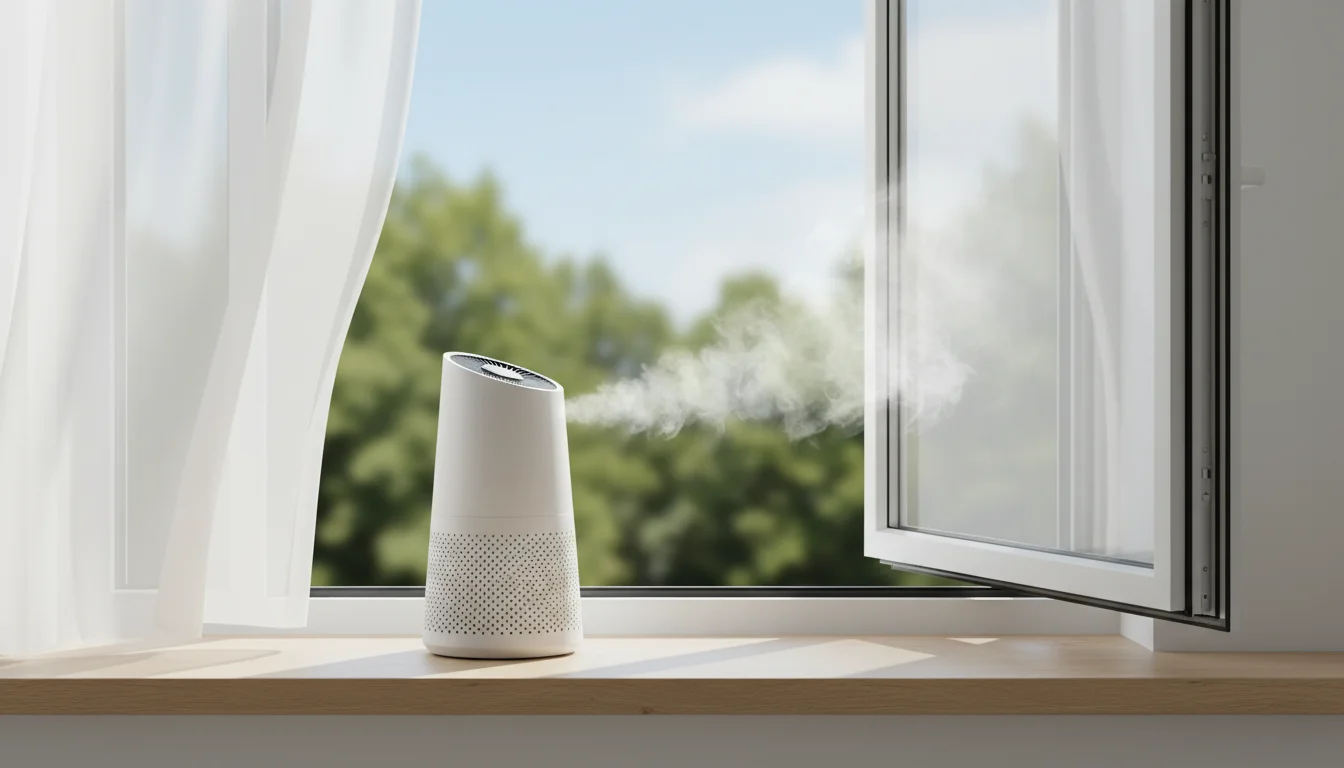
Can You Use an Air Purifier With Windows Open?
Yes, but expect 30-50% reduced effectiveness compared to closed-room operation.
Harvard research found PM2.5 reduction dropped from 63% with closed windows to 46% with windows open. The continuous influx of outdoor pollutants forces your purifier to work harder without ever achieving the cumulative cleaning effect possible in sealed environments. A University of Surrey classroom study showed PM10 pollution still fell 18-36% when alternating window ventilation with purifier operation.
| Condition | PM Reduction | Best For |
|---|---|---|
| Windows Closed | 90% in 20 min | Maximum particle removal |
| Windows Open | 60% in 20 min | Balancing fresh air needs |
| Alternating Strategy | 18-36% overall | VOC removal + particle control |
Some filtration beats no filtration. If you need to balance outdoor pollution against indoor CO2 or volatile organic compounds, running your purifier with windows cracked still meaningfully reduces particulate matter according to [Smart Air Filters].
Ventilation vs Air Purification: Understanding the Trade-offs
Natural ventilation and mechanical purification solve different problems. Understanding which pollutants each addresses helps you make smarter decisions.
HEPA filters excel at capturing particles: dust, pollen, pet dander, and smoke. They struggle with gases. Formaldehyde from new furniture, VOCs from cleaning products, and CO2 from breathing all pass right through even the best HEPA filters. Fresh outdoor air dilutes these gases naturally.
| Pollutant Type | Air Purifier Effectiveness | Ventilation Effectiveness |
|---|---|---|
| PM2.5 particles | High | Low (adds more) |
| Pollen | High | Low (adds more) |
| CO2 | None | High |
| Formaldehyde/VOCs | Low-Medium | High |
| Cooking odors | Medium | High |
| Humidity control | None | Medium |
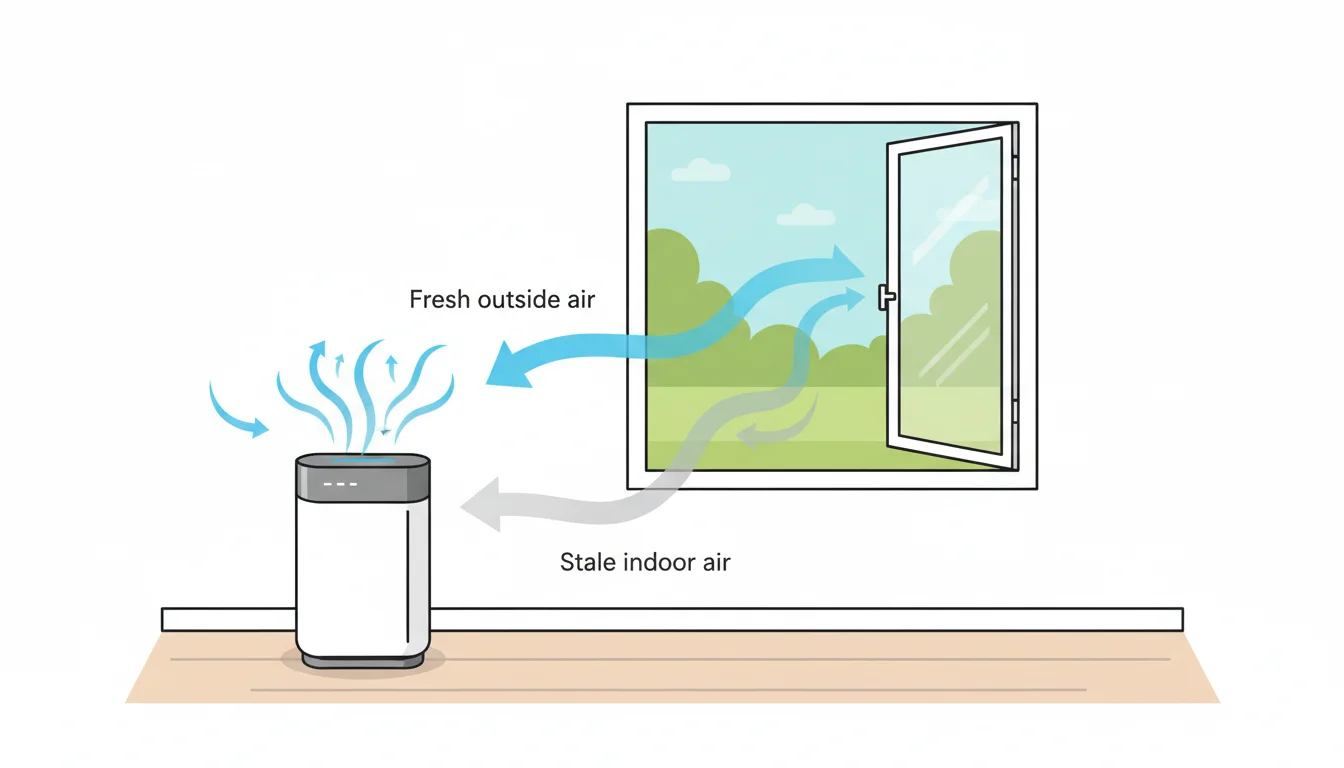
The real insight: you need both strategies at different times. I spent months running my purifier 24/7 with windows sealed before realizing my headaches came from CO2 buildup, not particles. Checking your specific air quality concerns changes everything.
When to Keep Windows Open With Your Air Purifier
Strategic window opening solves problems your purifier cannot address alone.
- Low outdoor AQI days (below 50): Open windows bring cleaner air than what's already inside most homes
- After cooking: Grease particles and combustion byproducts need flushing, not just filtering
- New furniture or renovation off-gassing: Formaldehyde concentrations drop faster with ventilation than filtration
- Multiple people in one room: CO2 levels above 1000 ppm cause drowsiness and reduced cognitive function
- Morning hours: Pollution levels typically bottom out between 6-8 AM in most urban areas
A time-based strategy works well for most situations. Open windows during morning hours when outdoor air quality peaks, then run your purifier with windows closed during afternoon traffic hours when vehicle emissions rise. According to [Airdog USA], early mornings and late evenings consistently show the lowest pollen and pollution levels.
When to Keep Windows Closed for Maximum Purification
Sealed room operation makes sense when outdoor air quality threatens your health more than indoor staleness.
- AQI above 100: Wildfire smoke, smog events, and industrial pollution episodes require closed windows
- Peak traffic hours: 7-9 AM and 4-7 PM near busy roads bring elevated vehicle emissions
- High pollen count days: Allergy sufferers benefit from sealed environments during spring and fall peaks
- Extreme temperatures: Running HVAC with open windows wastes energy and money
- Nighttime sleep: Consistent clean air delivery matters most during 7-8 hours of breathing in one spot
A word of caution about allergy season: I learned the hard way that cracking a window "just a little" during high pollen days completely negated my purifier's work. My symptoms returned within an hour. Check local pollen forecasts before making ventilation decisions if you have sensitivities.
Room Size and Air Purifier Capacity: Matching for Open Windows
Choose a purifier rated for 1.5-2x your actual room size when running with windows open.
Open windows reduce purifier effectiveness by 30-60% because outdoor air continuously dilutes your filtered indoor environment. A higher CADR rating compensates for this constant air exchange. Small rooms feel the impact more dramatically since the volume exchange happens faster.
| Room Size | Standard CADR Needed | Open Window CADR Needed |
|---|---|---|
| 150 sq ft | 100-150 CFM | 150-225 CFM |
| 300 sq ft | 200-250 CFM | 300-375 CFM |
| 500 sq ft | 300-350 CFM | 450-525 CFM |
| 800+ sq ft | 400+ CFM | Consider multiple units |
Large rooms or open floor plans need either one high-capacity unit or multiple purifiers positioned strategically. Placing a purifier near the window captures incoming pollutants at the source according to HisoAir. This placement won't fully offset dilution effects, but it does improve overall performance.
Energy and Cost Considerations
Running your purifier with open windows increases energy consumption by 30-50% and shortens filter life.
The constant influx of outdoor particles forces higher fan speeds and faster filter saturation. A filter rated for 6 months in a sealed room might last only 3-4 months with regular window ventilation. Monitor filter indicators closely and budget for more frequent replacements.
- Higher operating costs: Fans running at max speed draw more electricity continuously
- Faster filter degradation: Outdoor particles clog HEPA media more quickly than recirculated indoor air
- HVAC interaction: Open windows during heating or cooling season waste conditioned air
A seasonal approach balances these costs effectively. Use more ventilation during mild spring and fall weather when HVAC stays off anyway, and rely more heavily on closed-room purification during summer and winter extremes. This strategy reduces both energy bills and filter replacement frequency according to Blueair.
FAQ
Does opening a window make my air purifier useless?
No. Studies show 60% particle reduction with windows open versus 90% closed. Reduced effectiveness still provides meaningful air quality improvement, especially for particle-sensitive individuals.
How long should I ventilate before closing windows and running my purifier?
Fifteen to twenty minutes of cross-ventilation typically exchanges most indoor air volume. This flushes CO2 and VOCs effectively before switching to sealed purification mode.
Should I turn off my air purifier when windows are open?
Keep it running. The purifier captures incoming outdoor pollutants and maintains some level of filtration. Turning it off means all outdoor contaminants accumulate unchecked.
What AQI level means I should close my windows?
Close windows when AQI exceeds 100 (orange level). Below 50 (green), outdoor air is typically cleaner than indoor air in most homes. Between 50-100, use judgment based on personal sensitivity.
Can I use a fan with my air purifier and open window?
Yes. Position the fan to direct outdoor air toward the purifier intake. This helps capture incoming pollutants more efficiently rather than letting them circulate throughout the room.
Do air purifiers remove COVID and other viruses better with windows closed?
HEPA filters capture virus-carrying aerosols more effectively in sealed rooms, while open windows dilute viral concentrations through ventilation. Both strategies reduce transmission risk through different mechanisms.
Which rooms benefit most from the open window approach?
Kitchens and bathrooms benefit most from ventilation due to high VOC and moisture levels. Bedrooms and living rooms where people spend extended time benefit more from closed-room purification.
How do I know if my indoor air is worse than outdoor air?
An indoor air quality monitor measuring PM2.5, CO2, and VOCs answers this definitively. Without monitoring, assume indoor air is worse if you have recent renovations, new furniture, multiple occupants, or cook frequently.
Share this post
Related Posts
UV Air Purifier for HVAC: Complete 2025 Guide to Cleaner Indoor Air
UV Air Purifier for HVAC: Complete 2025 Guide to Cleaner Indoor Air
Air Purifiers for Cigarette Smoke: What Actually Works (2025 Guide)
Air Purifiers for Cigarette Smoke: What Actually Works (2025 Guide)
Air Purifier Ionizers: Good or Bad? The Science-Backed Verdict for 2025
Air Purifier Ionizers: Good or Bad? The Science-Backed Verdict for 2025