HEPA vs Ionic Air Purifiers: Which Technology Is Right for Your Home in 2025?
Choosing between HEPA and ionic air purifiers can feel overwhelming. Both technologies promise cleaner indoor air, but they work in fundamentally different ways—and those differences matter for your health, budget, and daily life.
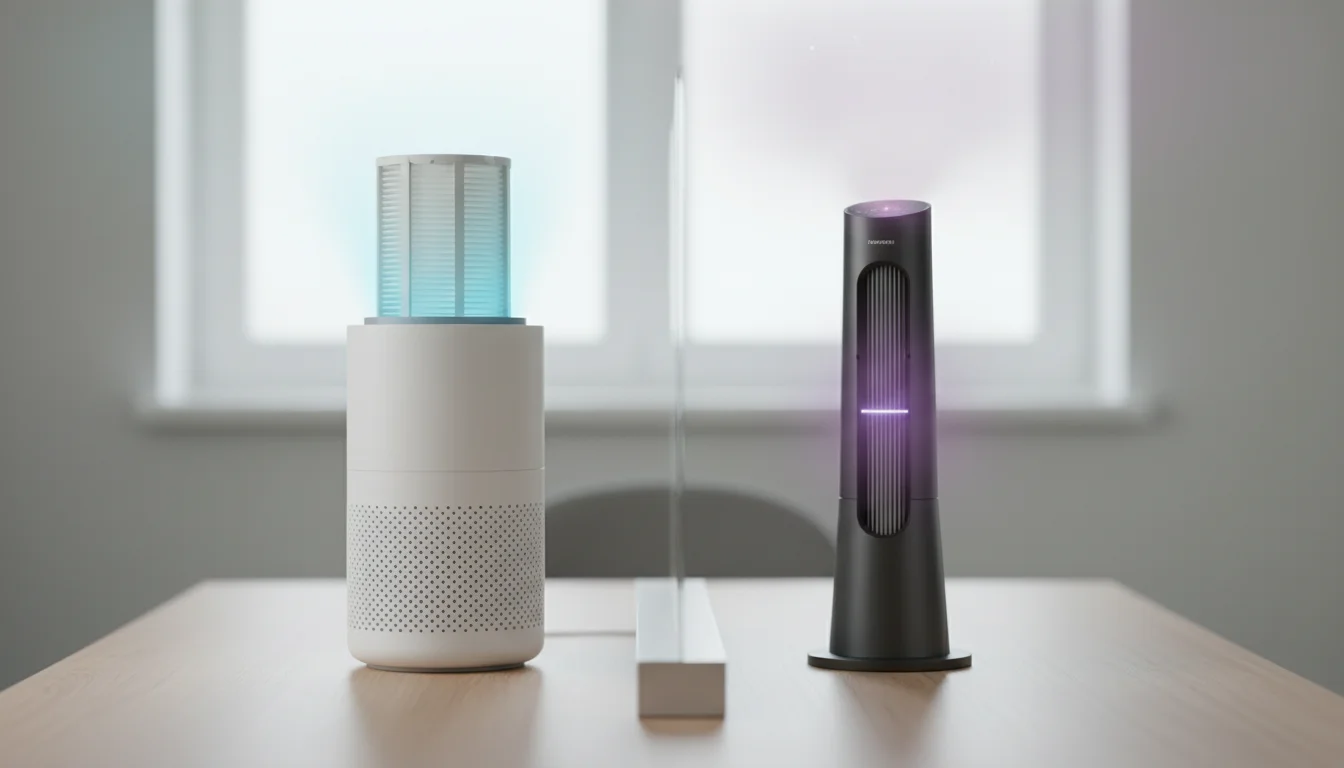
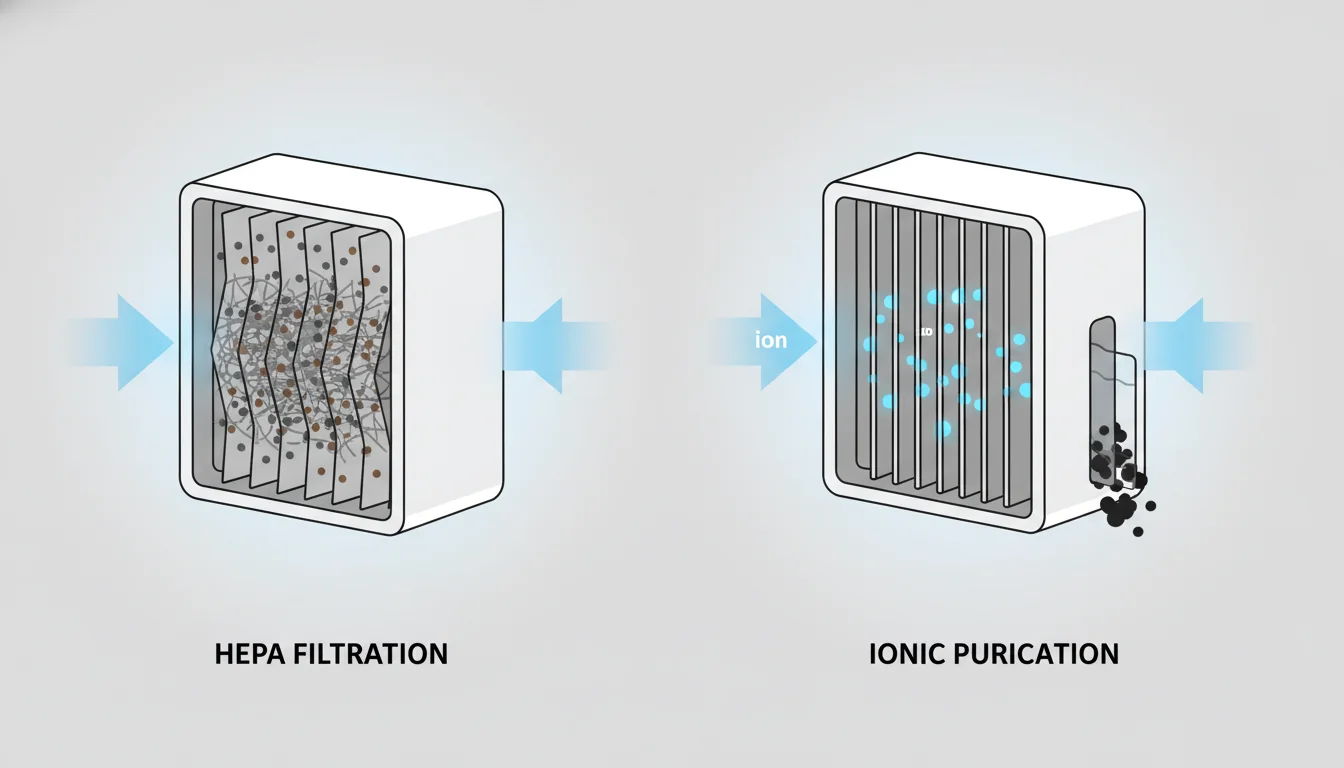
HEPA filtration uses dense fiber meshes to physically trap particles, while ionic purifiers emit charged ions that cause particles to settle out of the air. Each approach has distinct advantages and limitations that make it suitable for different situations.
This guide breaks down the science, costs, safety considerations, and real-world performance of both technologies. By the end, you'll know exactly which type of air purifier fits your home and lifestyle in 2025.
How HEPA Filters Work: The Science Behind Mechanical Filtration
HEPA (High-Efficiency Particulate Air) filters represent the gold standard in air purification technology. These filters use a dense mesh of randomly arranged microfibers to physically trap airborne particles as air passes through Eoleaf.
True HEPA filters capture at least 99.97% of particles 0.3 microns and larger. This specific size—0.3 microns—is known as the Most Penetrating Particle Size (MPPS), where the filter works least efficiently. Particles both larger and smaller are actually captured at even higher rates Smart Air Filters.
The filtration process relies on four key mechanisms:
- Inertial impaction: Larger particles (above 0.5 microns) can't follow air currents around fibers and crash directly into them
- Interception: Medium-sized particles follow airflow but touch fibers and stick due to molecular forces
- Diffusion: Tiny particles below 0.1 microns move erratically through Brownian motion, increasing their chances of hitting fibers
- Electrostatic attraction: Some HEPA fibers carry a surface charge that pulls particles toward them Christmas Air
HEPA filters use multiple layers of fine fiberglass fibers arranged from coarse to fine. This creates a maze-like structure that effectively traps dust, pollen, mold spores, pet dander, bacteria, and even some viruses.
The technology is so reliable that hospitals, laboratories, and clean rooms depend on it where sterile air is critical.
How Ionic Purifiers Work: Understanding Ionization Technology
Ionic air purifiers take a completely different approach to cleaning the air. Instead of trapping particles in a filter, they emit streams of negatively charged ions into your room Air Health.
These negative ions attach to airborne particles like dust, pollen, and smoke. Once charged, the particles become heavy and either fall to nearby surfaces or collect on positively charged plates inside the unit.
Two main types of ionic purifiers exist:
- Electrostatic precipitators: These contain charged collection plates that attract and hold particles. The plates need periodic cleaning but don't require replacement.
- Air ionizers: These release ions into the room without collection plates. Particles settle on floors, walls, and furniture instead.
One notable advantage of ionic technology is its ability to affect ultrafine particles smaller than what HEPA filters typically capture. Some particles below 0.1 microns can be charged and removed from breathing air Oransi.
Ionic purifiers also operate more quietly than HEPA units since they don't need powerful fans to force air through dense filter media. This makes them popular choices for bedrooms and offices where noise matters.
Effectiveness Comparison: What Each Technology Actually Removes
When comparing HEPA vs ionic air purifiers for particle removal, the data clearly favors HEPA technology for most applications.
HEPA filters deliver consistent, verifiable results. They remove 99.97% of particles at their least efficient size and perform even better for larger allergens like pollen and dust mites. This consistency stems from standardized testing—every true HEPA filter must meet the same certification requirements Consumer Reports.
Ionic purifiers show more variable performance. Their effectiveness depends heavily on:
- The specific model and manufacturer
- How clean the collection plates are (dirty plates lose efficiency rapidly)
- Room size and air circulation patterns
- Particle types present in the air
Real-world testing consistently shows HEPA purifiers achieving higher Clean Air Delivery Rates (CADR). CADR measures how much filtered air a purifier produces per minute—a direct indicator of cleaning power Air Health.
| Metric | HEPA Purifiers | Ionic Purifiers |
|---|---|---|
| Particle capture rate | 99.97% at 0.3 microns | Varies by model (typically lower) |
| Testing standards | Certified, standardized | No consistent industry standards |
| CADR ratings | Generally high | Generally lower |
| Performance consistency | Stable until filter needs replacement | Decreases as plates get dirty |
Important limitation: Neither technology effectively removes gases, volatile organic compounds (VOCs), or odors. If you're concerned about chemical pollutants or smells, you'll need activated carbon filtration regardless of which primary technology you choose Airoasis.
The Ozone Question: Safety Concerns and Health Impacts
Here's where HEPA and ionic air purifiers show their most significant difference: ozone production.
HEPA filters produce zero ozone. They're purely mechanical devices that trap particles without any chemical reactions or electrical discharges. This makes them the safest choice for people with asthma, respiratory conditions, or chemical sensitivities.
Many ionic purifiers, however, generate ozone as a byproduct of the ionization process. Ozone is a respiratory irritant that can trigger asthma attacks, cause chest pain, and reduce lung function even at low concentrations Air Health.
The EPA explicitly recommends avoiding ozone-generating air purifiers in occupied spaces. Their concern isn't hypothetical—ozone exposure at levels produced by some ionizers can worsen the very respiratory conditions people buy air purifiers to address Aerify.
Regulatory safeguards exist but vary:
- California's CARB (California Air Resources Board) certification limits ozone output to 0.05 ppm
- Products sold in California must meet this standard
- No federal requirement exists for other states
Modern ionic purifiers from reputable brands have worked to minimize ozone production. Some models now meet California's strict standards and produce negligible ozone. However, you must verify certifications before purchasing—not all manufacturers prioritize safety Oransi.
Bottom line: If anyone in your household has asthma, allergies, or respiratory issues, HEPA filtration is the safer choice. If you prefer ionic technology, only buy units with explicit CARB certification or equivalent ozone safety testing.
Cost Analysis: Initial Price vs Long-Term Ownership
The upfront price tells only part of the story. True ownership costs include filter replacements, energy use, and maintenance over the life of the unit.
HEPA purifier costs:
- Initial purchase: $50–$500 depending on room coverage and features
- Annual filter replacement: $30–$100 for genuine HEPA filters
- Pre-filter replacements: $10–$30 every 3–6 months
- Energy consumption: Moderate (fans run continuously)
Ionic purifier costs:
- Initial purchase: $50–$300
- Annual filter costs: $0 (filterless) or minimal (washable plates)
- Maintenance: Periodic plate cleaning (free)
- Energy consumption: Slightly lower than HEPA units
Five-year cost comparison:
A mid-range HEPA purifier ($150) with annual filter costs ($60/year) totals approximately $450 over five years. A comparable ionic purifier ($150) with no filter costs stays at $150 plus minimal electricity savings.
That's a potential $200–$300 savings with ionic—but HEPA delivers significantly better filtration performance for that additional investment.
Consider filter availability when making your decision. Some manufacturers use proprietary filters that cost more or become difficult to find as models age. Generic HEPA filters exist for many popular units and can reduce ongoing costs substantially.
Best Use Cases: Matching Technology to Your Needs
Understanding when to choose HEPA vs ionic air purifiers comes down to matching technology to your specific situation.
Choose HEPA filtration if you:
- Have allergies, asthma, or respiratory conditions
- Own pets and want to reduce dander
- Need purification for bedrooms or nurseries
- Want verified, consistent air cleaning performance
- Prioritize health outcomes over convenience
Consider ionic purification if you:
- Need extremely quiet operation (bedrooms, offices)
- Prefer minimal ongoing maintenance
- Have budget constraints on operating costs
- Want supplemental purification in low-concern areas
- Don't have respiratory sensitivities in your household
Hybrid units deserve consideration. Many modern air purifiers combine HEPA filtration with ionization technology, offering the proven particle removal of mechanical filters plus the ultrafine particle capabilities of ionizers. These hybrids typically allow you to disable the ionizer function if ozone is a concern.
Room size matters significantly. HEPA purifiers generally achieve higher CADR ratings, making them more effective for larger spaces. Ionic purifiers may work adequately in small rooms but struggle to clean larger areas effectively. Always check the manufacturer's recommended room size and compare it to your actual space.
Making Your Decision
For most households, HEPA filtration offers the best combination of proven effectiveness, consistent performance, and safety. The technology has decades of testing behind it, standardized certifications you can trust, and zero ozone concerns.
Ionic purifiers make sense in specific situations: when noise is a primary concern, when you can't commit to filter replacement costs, or when you need supplemental purification in a space without respiratory-sensitive occupants.
Consider your specific needs carefully. Do you have health conditions that require the cleanest possible air? HEPA is your answer. Do you want a quiet, low-maintenance unit for a home office? Ionic might serve you well.
Whichever technology you choose, verify the specifications, check for safety certifications, and match the unit's capacity to your room size. Explore detailed air purifier reviews to find the specific model that fits your home and budget in 2025.
Share this post
Related Posts
UV Air Purifier for HVAC: Complete 2025 Guide to Cleaner Indoor Air
UV Air Purifier for HVAC: Complete 2025 Guide to Cleaner Indoor Air
Air Purifier With Window Open: Does It Work? (2025 Guide)
Air Purifier With Window Open: Does It Work? (2025 Guide)
Air Purifiers for Cigarette Smoke: What Actually Works (2025 Guide)
Air Purifiers for Cigarette Smoke: What Actually Works (2025 Guide)