Sleeping With an Air Purifier: How Clean Air Transforms Your Sleep Quality
Americans spend roughly one-third of their lives asleep, yet bedroom air quality remains overlooked by most households. A randomized controlled study found that HEPA air purifiers increased total sleep time by 12 minutes per night while reducing nighttime awakenings by 8%. This guide covers the science behind sleeping with an air purifier, proven benefits for different sleeper types, and how to choose the right unit for your bedroom.
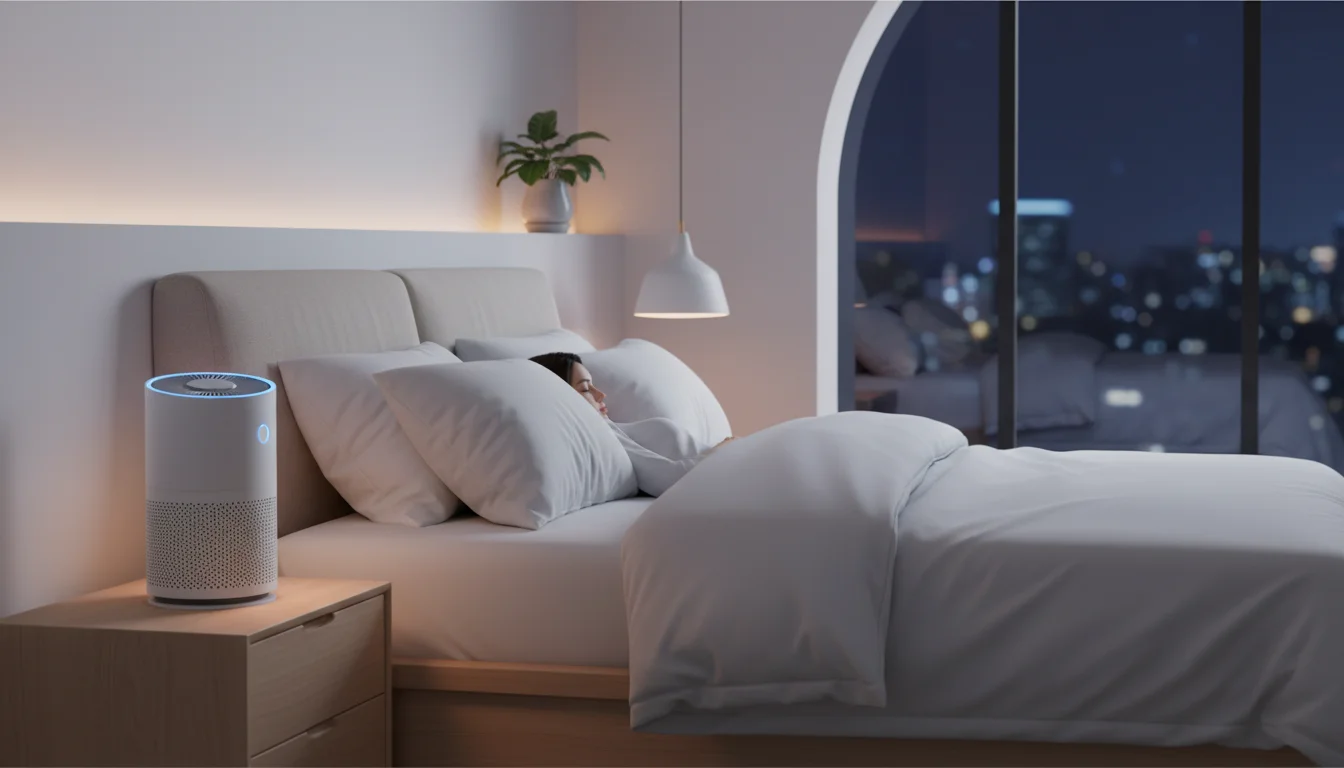
Can You Sleep With an Air Purifier On All Night?
Running an air purifier throughout the night is both safe and recommended for optimal results. Modern units feature energy-efficient motors designed for continuous 24/7 operation without overheating risks.
What continuous overnight operation provides:
- Constant removal of dust mites, pollen, pet dander, and VOCs that accumulate while you sleep
- Sleep mode settings that reduce fan speed, lower noise output, and dim LED indicators
- Consistent air quality maintained throughout all sleep cycles
- White noise generation that many users find conducive to deeper rest
Addressing common concerns:
| Concern | Reality | Solution |
|---|---|---|
| Electricity costs | Most purifiers use 30-70 watts on low settings | Annual cost typically $20-50 depending on local rates |
| Filter wear | Continuous use accelerates replacement schedule | Budget for filters every 6-9 months instead of 12 |
| Overheating | Modern motors designed for extended operation | Place in an open area with adequate ventilation |
| Noise disruption | Sleep modes operate at 25-35 dB | Equivalent to a whisper or light rainfall |
Timer functions and auto modes provide additional flexibility. Set your purifier to run at higher speeds before bedtime, then automatically switch to sleep mode when you turn in. Research published in the International Journal of Environmental Research and Public Health confirms that overnight air purification reduces allergens and respiratory irritants throughout your sleeping hours.
How Air Purifiers Improve Sleep Quality: The Science
Clean bedroom air directly correlates with better sleep metrics across multiple research studies. The mechanism involves reduced respiratory irritation, fewer inflammatory responses, and more stable breathing patterns throughout the night.
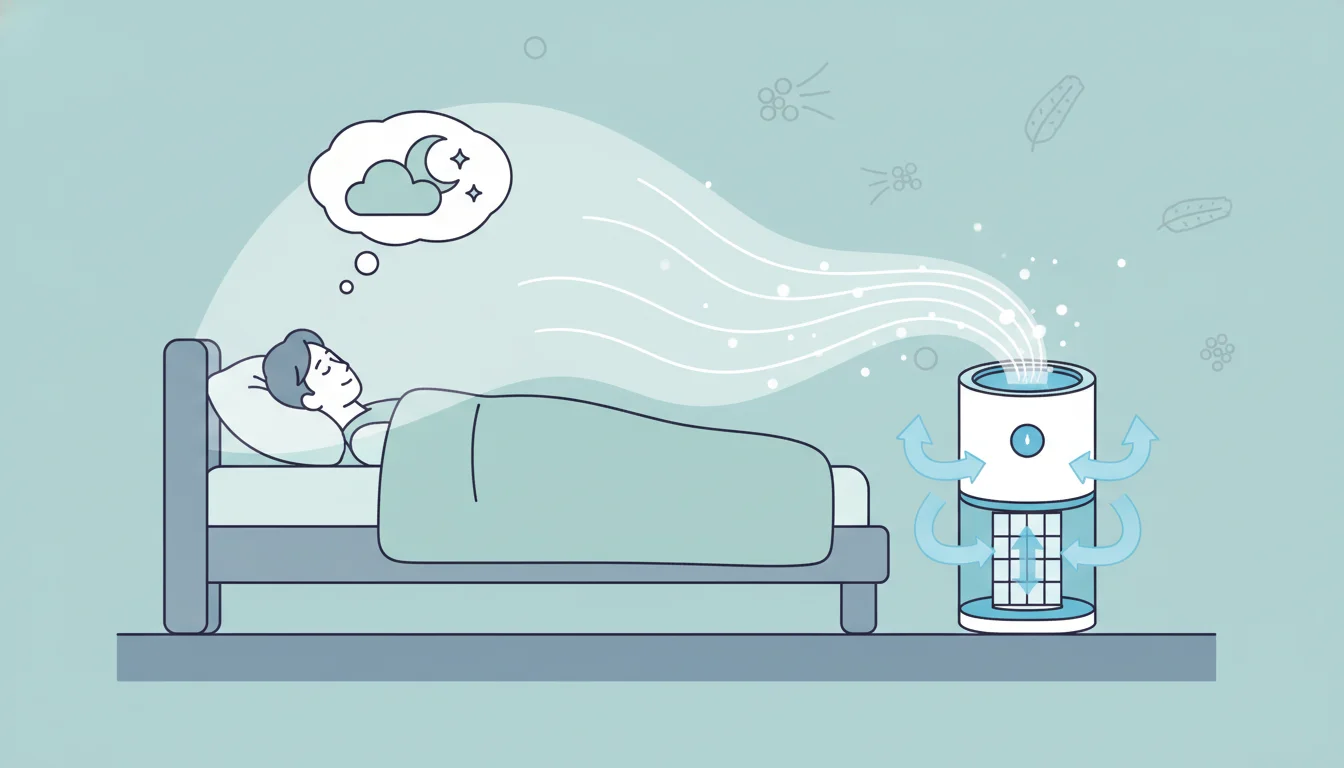
Research findings on air purification and sleep:
- A Journal of Sleep Research study found that HEPA filter use increased total sleep time by 12 minutes and time in bed by 19 minutes per night
- SleepScore Labs documented a 6% increase in deep sleep duration among participants using air purifiers
- Participants reported a 27% reduction in perceived allergy symptoms affecting sleep quality
- Measurable improvements occurred even in healthy adults without pre-existing respiratory conditions
How filtration affects sleep stages:
True HEPA filters capture 99.97% of particles down to 0.3 microns, including dust mite allergens, mold spores, pollen, and fine particulate matter that trigger inflammatory responses in airways. When your respiratory system works less hard overnight, your body allocates more resources to restorative processes.
The connection between indoor air quality and circadian rhythm regulation involves your autonomic nervous system. Irritated airways activate stress responses that fragment sleep architecture. Clean air allows your parasympathetic nervous system to dominate, promoting the deep relaxation needed for quality REM and slow-wave sleep stages.
I noticed the difference most during allergy season. Before using a bedroom purifier, I woke with a scratchy throat and congestion that took hours to clear. Now my mornings start cleaner, and my sleep tracker shows fewer movement episodes overnight.
Benefits for Allergy and Asthma Sufferers
Nighttime allergy symptoms tend to intensify because allergens concentrate in bedding, pillows, and bedroom carpeting. Running a purifier while you sleep attacks these triggers at their source.
Why allergies worsen at night:
- Dust mites thrive in mattresses and bedding where humidity from body heat accumulates
- Lying down allows postnasal drip to pool in the throat
- Bedroom doors stay closed, preventing fresh air circulation
- Pet dander concentrates in rooms where animals sleep or spend time
Specific benefits documented in studies:
| Condition | Improvement Measured | Source |
|---|---|---|
| Seasonal allergies | 27% reduction in sneezing, congestion, and itchy eyes | Respiratory Therapy |
| Nighttime asthma | Reduced frequency of nocturnal attacks | [EPA Indoor Air Quality Research] |
| VOC sensitivity | Lower headache and nausea reports | [Environmental Protection Agency] |
| Pet allergies | Decreased histamine responses overnight | [SleepScore Labs] |
Activated carbon filters add another layer of protection by absorbing odors and volatile organic compounds. These chemicals off-gas from furniture, paint, and cleaning products. Removing them creates a more comfortable sleep environment that your body recognizes as safe and restful.
Fair warning: air purifiers complement allergy treatment but don't replace it. Pair your purifier with regular bedding washing in hot water and HEPA vacuuming for maximum relief. This combination addresses both airborne and settled allergens.
The White Noise Effect: An Unexpected Sleep Benefit
The steady hum of an air purifier creates consistent background sound that masks disruptive noises. This acoustic benefit operates independently from air quality improvements but compounds the overall sleep enhancement.
How white noise supports sleep:
- Raises your arousal threshold so sudden sounds are less likely to wake you
- Fills auditory space with predictable sound, reducing the contrast between silence and noise spikes
- Acts as a conditioned relaxation cue after regular use
- Decreases brain stimulation and anxiety during sleep onset
Noise levels across purifier types:
| Purifier Category | Typical Range | Sleep Suitability |
|---|---|---|
| Ultra-quiet models | Under 25 dB | Best for silence-preferring sleepers |
| Standard sleep mode | 25-35 dB | Ideal white noise range |
| Medium fan speed | 35-45 dB | Good masking, noticeable presence |
| High/turbo settings | 50-60+ dB | Pre-sleep air cleaning only |
Light sleepers benefit most from the masking effect. If your bedroom faces a street or shares walls with noisy neighbors, the purifier's consistent sound smooths over irregular disruptions. Research shows white noise at 50-60 decibels effectively raises the threshold for sleep-induced arousal without causing hearing strain.
Those who prefer complete silence should look for purifiers with sub-30 dB sleep modes. Some models achieve 24 dB on their lowest setting. Test before committing, since individual sensitivity varies significantly.
Choosing the Best Air Purifier for Your Bedroom
The right bedroom purifier balances filtration performance with noise output and room coverage. Getting this wrong means either inadequate air cleaning or sleep disruption from excessive noise.
Essential specifications for bedroom use:
- Noise level: Under 35 dB on sleep mode (under 25 dB for light sleepers)
- CADR rating: Minimum 100 CFM for rooms up to 200 sq ft
- Filter type: True HEPA (not "HEPA-style" or "HEPA-like")
- Room coverage: Match or exceed your bedroom square footage
- Sleep mode: Automatic dimming and reduced fan operation
Placement principles:
Position your purifier 3-6 feet from your bed at floor level or on a low nightstand. Keep it 6-12 inches from walls for proper air intake. Avoid placing it directly next to your head, where even quiet operation becomes noticeable.
Cost considerations:
| Expense Category | Budget Range | Premium Range |
|---|---|---|
| Initial purchase | $80-150 | $300-600 |
| Annual filter replacement | $30-50 | $80-150 |
| Electricity (annual) | $20-35 | $40-60 |
| Total first-year cost | $130-235 | $420-810 |
Smart features like air quality sensors and app connectivity add convenience but increase price. Auto mode adjusts fan speed based on detected particle counts, running quieter when air is clean and ramping up when needed. This extends filter life while maintaining optimal air quality.
Trust me on this: spend extra on a quality unit with genuine HEPA filtration. Cheap purifiers often fail to meet advertised specifications and break within a year.
Potential Downsides and How to Avoid Them
No sleep solution works perfectly for everyone. Understanding potential issues helps you prevent or address them before they undermine your air purifier investment.
Common problems and solutions:
- Noise complaints: Choose models with dedicated sleep modes under 30 dB. Run on higher speed before bed, then switch to sleep mode.
- Dry air: Air purifiers don't remove humidity, but increased air circulation can feel drying. Pair with a small humidifier if needed.
- Ozone production: Avoid ionizers and electrostatic precipitators for bedroom use. Stick to mechanical HEPA filtration only.
- Filter neglect: Dirty filters reduce performance and can release trapped particles. Set calendar reminders for replacement.
- Blue light exposure: LED indicators can disrupt melatonin production. Choose models with display-off options or cover lights with tape.
The EMF concern comes up frequently. Modern air purifiers produce electromagnetic fields comparable to other small appliances. Placing the unit 3+ feet from your head keeps exposure negligible. No credible research links air purifier EMF to sleep disruption.
One mistake I made early: buying an oversized purifier thinking more power meant better results. The unit cycled loudly even on low settings because my bedroom was too small for its minimum output. Match the purifier to your room size for quieter, more efficient operation.
FAQ
How close should an air purifier be to your bed?
Position your purifier 3-6 feet from your bed for optimal air circulation without noise disturbance. This distance allows cleaned air to reach your breathing zone while keeping fan sounds at a comfortable level.
Do air purifiers help with snoring?
Air purifiers can reduce snoring caused by nasal congestion from allergies or irritants. However, they won't address snoring from structural issues like a deviated septum or sleep apnea, which require medical evaluation.
Should I close my bedroom door when using an air purifier?
Closing the door helps your purifier work more efficiently by containing the cleaned air within the room. Open doors allow continuous air exchange with uncleaned spaces, forcing your purifier to work harder.
How long before I notice sleep improvements from an air purifier?
Most users report noticeable changes within 3-7 days of consistent overnight use. Allergy sufferers often experience faster relief, sometimes within the first night or two of operation.
Do air purifiers use a lot of electricity overnight?
Running a purifier on sleep mode typically costs $2-5 per month in electricity. Most bedroom models consume 20-50 watts on low settings, comparable to a standard light bulb.
Can air purifiers make allergies worse?
Only if filters become saturated and release trapped particles back into the air. Follow manufacturer replacement schedules and avoid washing HEPA filters unless they're specifically designed for it.
Is it better to run an air purifier all day or just at night?
Continuous operation maintains consistently clean air, but running during sleep hours provides the most benefit since you spend 7-9 hours breathing bedroom air. Pre-sleep operation on high speed followed by overnight sleep mode offers an effective compromise.
Share this post
Related Posts
UV Air Purifier for HVAC: Complete 2025 Guide to Cleaner Indoor Air
UV Air Purifier for HVAC: Complete 2025 Guide to Cleaner Indoor Air
Air Purifier With Window Open: Does It Work? (2025 Guide)
Air Purifier With Window Open: Does It Work? (2025 Guide)
Air Purifiers for Cigarette Smoke: What Actually Works (2025 Guide)
Air Purifiers for Cigarette Smoke: What Actually Works (2025 Guide)