Best Air Purifiers for Cat Litter Smell: Complete Guide for 2025
An air purifier for cat litter smell uses activated carbon filtration to neutralize ammonia and sulfur compounds at the molecular level. Laboratory testing shows that quality carbon filters remove up to 95% of ammonia odors within 40 minutes. This guide covers the science behind odor elimination, essential features to look for, optimal placement strategies, and how to choose the right unit for your budget and household size.
How Air Purifiers Eliminate Cat Litter Odors
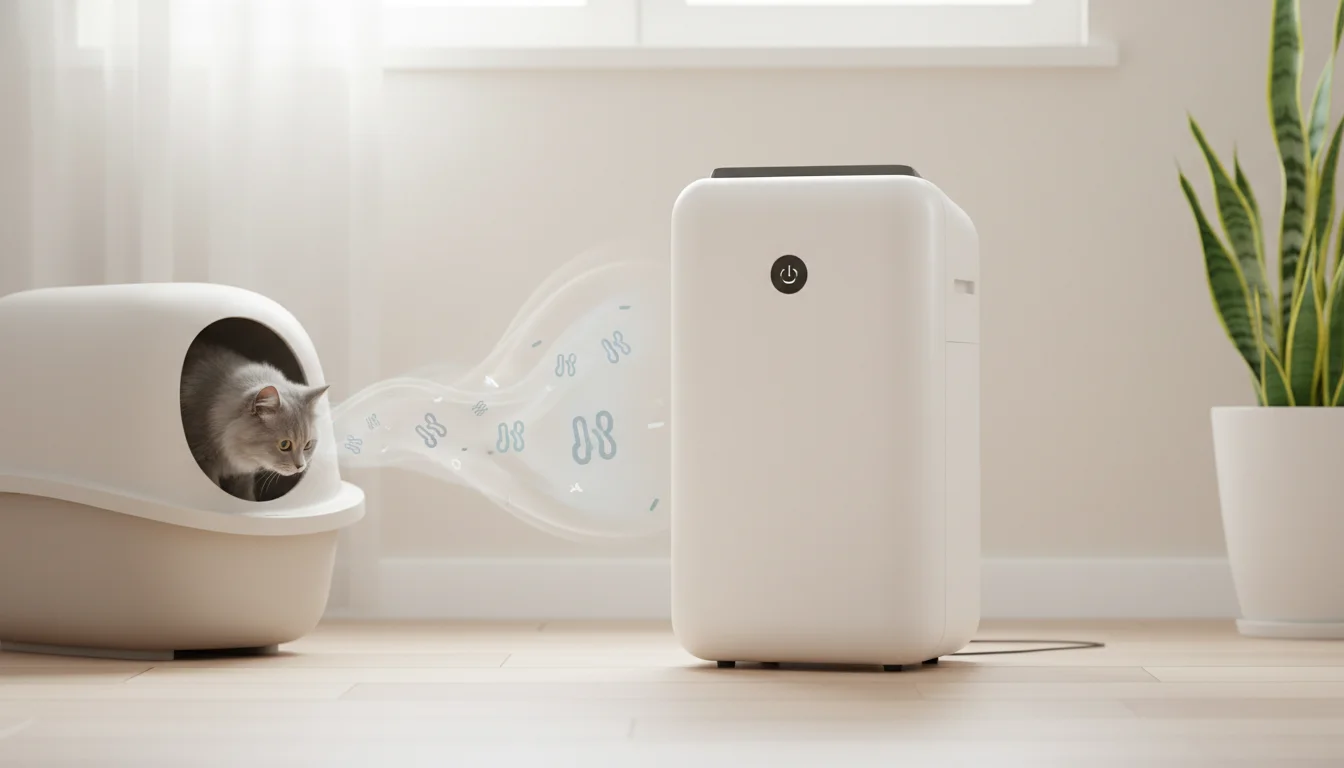
Activated carbon traps ammonia molecules in microscopic pores, binding them permanently rather than masking them with fragrance.
Ammonia molecules from cat urine measure about 0.26 nanometers—incredibly tiny. The carbon filter's multi-scale pore system captures these molecules deep within its structure, preventing their release back into your air. This is true elimination, not the temporary cover-up you get from scented sprays or baking soda.
A quality pet odor air purifier uses multi-stage filtration:
- Pre-filter: Catches cat hair and litter dust, protecting the main filters and extending their lifespan
- HEPA filter: Removes 99.97% of particles down to 0.3 microns, including pet dander and airborne allergens
- Activated carbon filter: The critical layer for odor removal, adsorbing gaseous molecules like ammonia and VOCs
Here's what most people miss: HEPA filters alone do nothing for smells. They trap particles, not gases. Without activated carbon, you're filtering dander while the ammonia stench floats right through. Coway confirms this distinction matters enormously for actual odor control.
Key Features to Look for in a Cat Litter Air Purifier
Carbon filter weight determines odor absorption capacity. More carbon means longer-lasting, more effective smell elimination.
| Feature | Budget Models (<$100) | Mid-Range ($100-250) | Premium ($250+) |
|---|---|---|---|
| Carbon Filter Weight | 0.5-1 lb | 2-5 lbs | 5-15 lbs |
| Room Coverage | Up to 200 sq ft | 200-400 sq ft | 400-800 sq ft |
| Noise Level | 40-55 dB | 25-45 dB | 20-40 dB |
| Filter Replacement | Every 2-3 months | Every 6-12 months | Every 12-18 months |
| Smart Features | None | Basic sensor | Full app control |
CADR ratings tell you how quickly a unit cleans air. Look for at least 100 CFM for a small litter box room. For bedrooms, noise levels under 35 dB on low settings keep the unit running without disturbing sleep.
Filter replacement costs add up fast. A budget unit with $30 filters every three months costs $120 yearly. A mid-range unit with $60 filters annually saves money long-term. [UAH Pet] found that total cost of ownership varies dramatically based on filter longevity.
Best Air Purifier Placement for Litter Box Odor Control
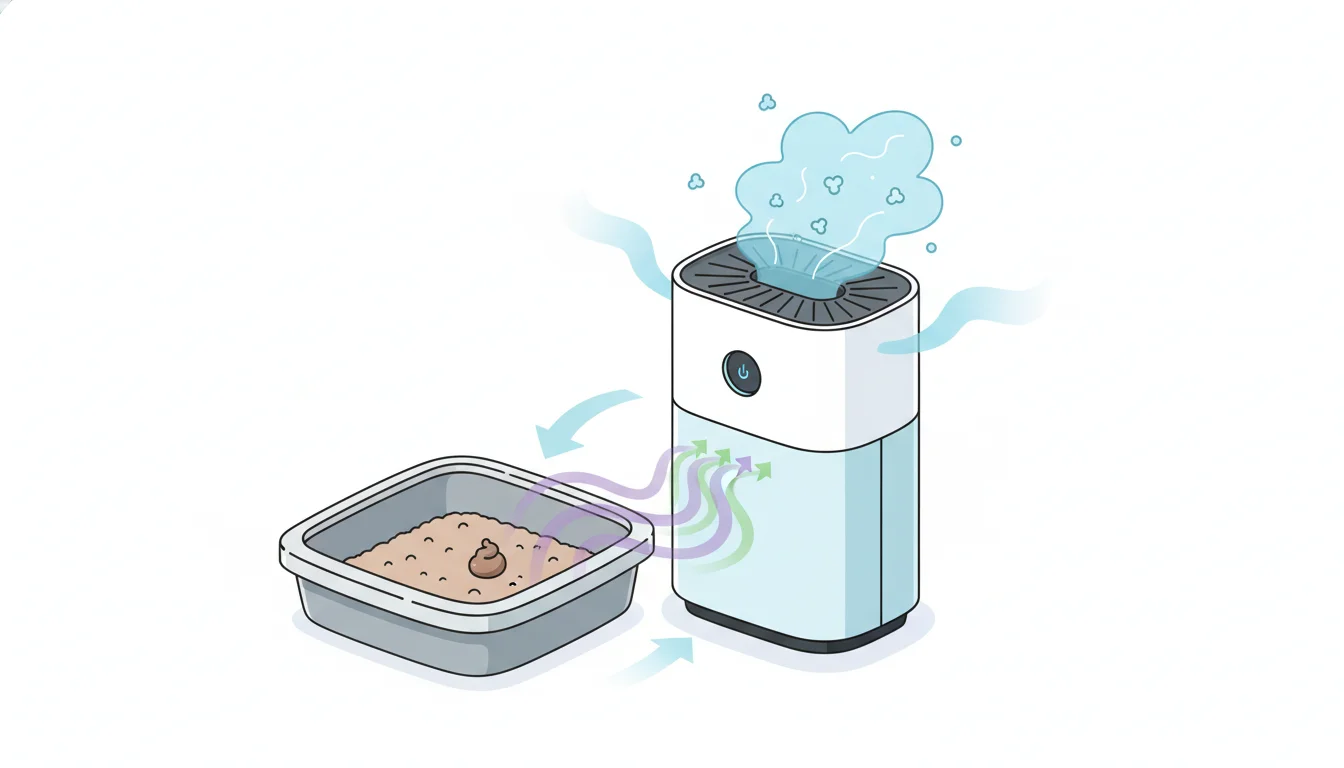
Position your unit 3 to 6 feet from the litter box, elevated 3 to 5 feet off the ground at breathing height.
Placing it too close seems logical but actually backfires. The intake gets overwhelmed with concentrated particles. Too far away, and odors disperse before capture. That 3-to-6-foot sweet spot lets the purifier draw in contaminated air efficiently while maintaining proper airflow.
Placement mistakes that kill effectiveness:
- Directly on top of or touching the litter box
- Pushed against walls or into corners
- On fluffy rugs or unstable surfaces
- Behind furniture blocking air intake
- In a different room from the litter box
For homes with multiple litter boxes, you have two options: use portable units you move between rooms, or place dedicated purifiers near each box. A single powerful unit in the hallway sounds efficient but performs poorly. Odors diffuse and become harder to capture at distance. Airdog confirms that proximity to the source matters more than raw power.
Budget vs. Premium Air Purifiers: What's Worth the Investment
Mid-range units between $100 and $250 deliver the best value for single-cat households with one litter box.
| Price Tier | Best For | Limitations | 2-Year Total Cost |
|---|---|---|---|
| Under $100 | Renters, single small room | Thin carbon filters, frequent replacements | $200-340 |
| $100-250 | Most cat owners | May struggle with severe odors | $220-370 |
| $250+ | Multi-cat homes, allergies | Higher upfront investment | $310-430 |
Budget models work fine for small spaces with good ventilation. However, their thin carbon filters saturate quickly, reducing effectiveness after 6 to 8 weeks even if the manufacturer claims 3 months. You'll smell the difference.
Premium models like the Austin Air HealthMate pack up to 15 pounds of activated carbon and zeolite—that's 10 to 15 times more than budget options. For multi-cat households or owners with respiratory sensitivities, this extra capacity pays for itself. The filter lasts longer, works harder, and handles the ammonia load from multiple boxes without faltering.
Multi-Cat Household Strategies for Maximum Odor Control
Two smaller purifiers near separate litter boxes outperform one large unit in a central location.
The math works like this: a 400-square-foot-rated purifier handles two boxes in the same room adequately, but litter boxes in different rooms need individual coverage. Air doesn't travel around corners effectively, and odors disperse before reaching a distant purifier.
Complementary strategies that multiply your purifier's effectiveness:
- Daily scooping reduces ammonia production by up to 50%
- Low-dust litter minimizes airborne particles clogging your pre-filter
- Covered litter boxes concentrate odors near intake vents
- Good room ventilation helps circulate air through the purifier
- Litter mats trap tracking and reduce dust spread
Some cat owners integrate purifiers with home HVAC systems using return vent filters. This whole-home approach supplements rather than replaces room-level purification. The concentrated odors near litter boxes need local treatment. Eoleaf recommends calculating total litter box surface area when sizing your air purification needs for multiple cats.
Health Benefits Beyond Odor Control
Air purifiers reduce pet dander exposure by 50 to 80%, providing relief for allergy sufferers living with cats.
HEPA filtration captures the protein particles that trigger allergic reactions. These float invisibly in your air, landing on furniture, bedding, and in your respiratory system. A running purifier continuously scrubs these allergens from circulation.
Litter dust poses underrated health risks:
- Silica particles from clumping litter irritate lungs
- Crystalline dust triggers coughing and sneezing
- Airborne bacteria from waste become respiratory hazards
- Fine particulates worsen asthma symptoms
For asthma sufferers, the air quality improvement proves dramatic. Removing both particulate matter and ammonia gases reduces respiratory irritation significantly. The combination of HEPA and activated carbon creates genuinely healthier indoor air—not the cosmetic improvement of scented products.
FAQ
How often should I run my air purifier near the litter box?
Run it continuously on low or medium settings. Odors accumulate constantly, and intermittent use allows ammonia levels to build between cycles. Continuous operation costs $3 to $8 monthly in electricity.
Do ionizers or UV air purifiers work for cat litter smell?
Ionizers and UV lights target particles and pathogens, not odor molecules. They provide minimal smell reduction without activated carbon. Some units combine these technologies with carbon filters for comprehensive cleaning.
How long do activated carbon filters last with cat litter odors?
Expect 6 to 12 months with single-cat use and 3 to 6 months with multiple cats. You'll notice reduced effectiveness before complete saturation. Replace filters when odors become noticeable despite the purifier running.
Will an air purifier eliminate litter smell completely?
No air purifier eliminates 100% of odors instantly. Quality units reduce smell by 85 to 95% with proper placement and regular filter changes. Combining purification with daily scooping achieves near-complete odor control.
Should I get a separate air purifier for each litter box?
Litter boxes in the same room can share one appropriately sized purifier. Boxes in different rooms need individual units or a portable model you relocate. Distance from the source determines effectiveness more than purifier power.
Do air purifiers help with cat urine smell on carpets or furniture?
Air purifiers treat airborne odors, not odors absorbed into materials. For urine-soaked surfaces, enzymatic cleaners break down the source. The purifier then captures any remaining airborne molecules after cleaning.
What CADR rating do I need for a litter box room?
Target 100+ CFM for rooms under 150 square feet and 150+ CFM for larger spaces. Higher ratings clean faster but cost more. Match CADR to your room size for efficient cycling without overspending.
Are washable filters effective for cat litter odor?
Washable HEPA filters work for particles. Washable carbon filters exist but lose effectiveness after washing as pores become clogged. Replaceable carbon filters provide superior long-term odor control despite higher ongoing costs.
Share this post
Related Posts
UV Air Purifier for HVAC: Complete 2025 Guide to Cleaner Indoor Air
UV Air Purifier for HVAC: Complete 2025 Guide to Cleaner Indoor Air
Air Purifier With Window Open: Does It Work? (2025 Guide)
Air Purifier With Window Open: Does It Work? (2025 Guide)
Air Purifiers for Cigarette Smoke: What Actually Works (2025 Guide)
Air Purifiers for Cigarette Smoke: What Actually Works (2025 Guide)